

In 2026, the average startup growth strategy looks like this: LinkedIn, a newsletter, SEO content, a few partnerships, some paid ads, and an Instagram account "we're really going to activate this quarter."
The founder and his operational team are everywhere. The startup is going nowhere.
Why? Because the startups that scale in 2026 do not do more. They do less, better, for longer on the same point. And that choice starts much earlier than the distribution strategy. It starts in the product.
What the teams that actually grow are doing
The temptation to multiply acquisition channels comes from an understandable place. When no channel performs well enough, opening a new one feels like action. The dashboard moves. Meetings have an agenda. But Ruben Dominguez, in his analysis of startup growth in 2026, puts it plainly: ad platforms have become very good at taking your money. Algorithms look for real engagement, not clicks. What worked as a shortcut ten years ago is now the bare minimum to stay in the game.
What the best teams have understood is that a distribution channel only becomes an advantage when it is mastered all the way through, when you know exactly how much each new user costs, how long they stay, and why. Not before. Opening a second channel before reaching that level of mastery on the first is diluting attention without increasing traction.
One channel, pushed all the way
How do you choose your distribution channel when you launch a startup? The answer is not in industry benchmarks or in what your competitors are doing. It is in the data you already have: who are the users who stay the longest, where do they come from, and why did they choose your product over an alternative?
That group defines your primary channel. Not your intuition about TikTok.
The European startups that managed to scale in recent years, Revolut in the UK, Doctolib in France, Personio in Germany, all went through a phase where they refused to spread themselves thin. One channel, refined message, acquisition cost stabilised before touching anything else. Repeatability always precedes scalability.
Why do fast-growing startups bet on a single channel early on? Because mastering a channel until it runs predictably takes between six and eighteen months depending on the market. Most give up before getting there because the results at month three do not yet look like a curve.
Growth as an architecture decision
This is where startup growth strategy meets the product. A distribution channel does not scale if the product does not retain. And a product does not retain if the first minutes of use do not deliver tangible value, without friction, without the user needing to be guided by hand.
This is not a design question. It is an architecture question. The loop that brings a user back without being pushed, what Dominguez calls "pull", is decided at the moment you structure the first interactions between the product and its users. Not when you hire a growth manager.
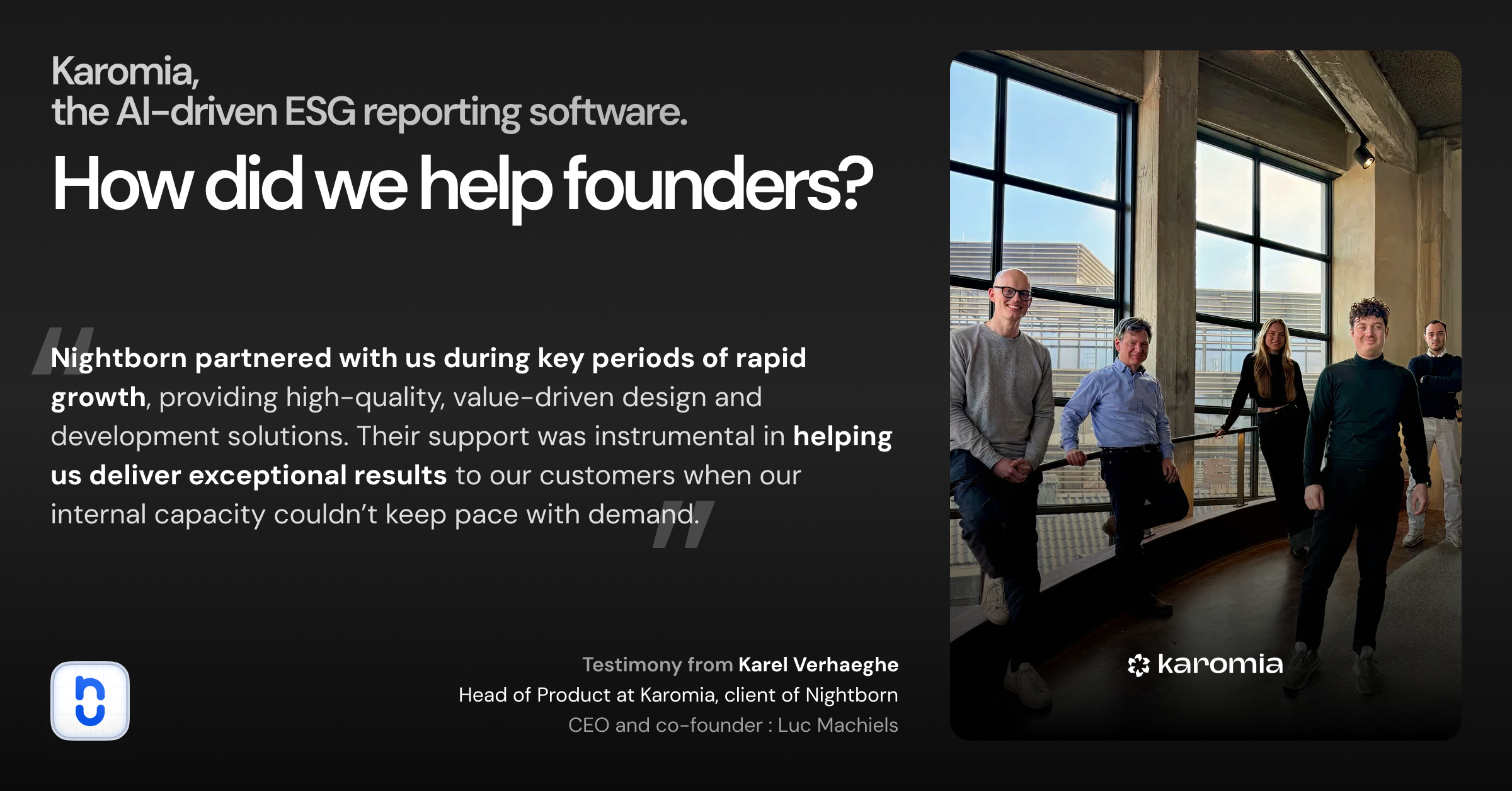
This is exactly why at Nightborn, every build starts with a question about usage before answering a question about the feature. What needs to happen in the first five minutes for this user to have a reason to come back tomorrow? The answer to that question is what separates a distribution channel that takes off from one that runs out of steam.
In 2026, the most counterintuitive growth strategy remains the same: choose less, go further. One mastered distribution channel is worth more than five active ones. And behind that channel, you need a product that does the work for you, not a dashboard that gives the illusion it does.
If you want to build the product loops that make that channel viable over the long term, that is where every Nightborn project starts.
.webp)